Akbar Khan · Political Poetry Pastiche
Communication Is Fraught/
Creativity Is Painful
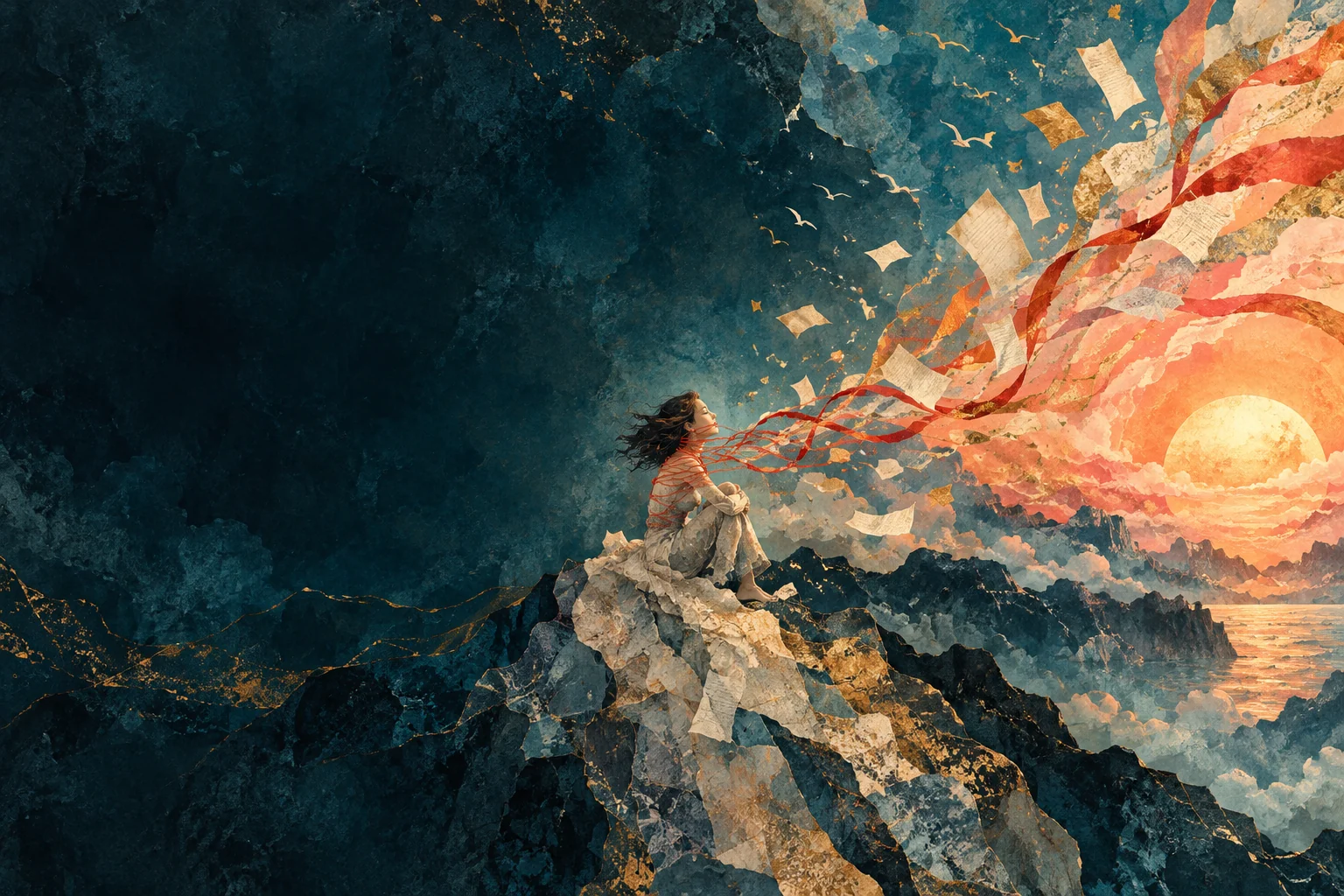
I have a recurring genre of nightmares in which I'm trying to say something...but I can't. In one, my mouth feels sewn shut. In another, it seems like it's stuck together with some adhesive from hell. In the worst, there's nothing stopping me from opening my mouth--but I can't get my lips to part. I keep shaking people by the shoulders, making muffled noises inside my mouth, which feels at once painfully constricted and cavernously large. Often I can hear myself whimpering in my sleep, and those whimpers wake me up. Sweaty and spent, I'm so glad to be awake, that that worst thing ever--I want to tell you something, but I can't get you to understand--not because you are inadequate, but because I am--is over.
Sometimes I think my choice of television writing as my career is the best choice I could have made, because I love TV, I love writing, I love the drama/comedy of the human experience. And sometimes I think it is the most idiotic choice I could have made, because I obsess about communication, ruminate over it, and I'm driven to tears because I'm trying so hard and often feel I'm not getting across what I wanted to convey. At those times, I think I should become a landscape artist, or fix rollercoasters at amusement parks, or monetize my love of dance and teach a movement class for pre-school age children. I think I should do anything but stay in my head, the source of so much horror and pain. And the source of so much ecstasy and beauty. I should be in the world, putting my hands in the Earth, or using the kinetic energy of dance as a nutritive succor for me and others. But I'm always drawn back to writing, to communicating.
I asked one of my rhetorical mentors, Professor Robert Gaines, who teaches rhetoric at Sewanee University in --- Tennessee--what the ancients--they who invented rhetoric as tool of communication--would think about how creativity would be painful. I should have known he'd say they would think it was an unhelpful way to approach the topic. Rhetoric was so real, such a lived experience, and such a daily concern for them. They had to make persuasive arguments to defend themselves in court or serve in the Senate.
“I think the ancients would have considered this sort of theory [my “Creativity Is Painful” theory] inefficient and unnecessary,” Gaines told me in an email exchange.
I too, think it's inefficient and unnecessary, to be honest! But I do feel that when I have an idea for, say a television script, it becomes an illness, or a demon, inside me. And it moves through different parts of my body--my head, my legs, my back--causing pain and discomfort, until the first words come out. And then I can breathe. Because I know I will give birth to this freak of nature inside me! Before it felt stuck inside forever, and those are the times I think I should go to the center of town and stand on my head, or spray myself with our garden hose, or ask someone to punch me as hard as they can. And in doing so, I'd exchange the mute compulsiveness of this feeling of wanting to tell you something with a wild and outrageous living in the now and feeling my body and its relation to its surroundings.
Various philosophers over the centuries have grappled with what I always call The Problem of Red, just because that's how I remember it first being explained to me: “When I say the word, 'red', how do I know you're thinking of the exact same thing I am?” When a teacher said this to me in an undergraduate English class, I was again pulled in two directions. Part of me wanted to leap for joy, to thank this genius professor for finally giving words to this anxiety I've had since I can remember remembering things. Another part of me wanted to scream, “Why!??! Why did you have to give it words?!” Maybe it could have remained a monster without fangs, haunting me in my mute nightmares but never daring to be seen in the open. Ultimately, I think it's better that it has a name, this problem.
Philosopher John Locke addressed this issue in his “An Essay Concerning Human Understanding”, in which he said language gave humans the ability to give voice to thoughts that would have otherwise remained private. And they lived happily ever after.
If only that had been the end of the thought. Instead it was the beginning of one, a typically onanistic, often “unhelpful” a la Professor Gaines, rabbit hole, as kids today might call it, common to Western philosophy. This allegedly useful idea is dressed up in its Sunday best by organized presentation and pithy expression, but its a rabbit hole nonetheless. The lyrics to “Head Like a Hole” by Nine Inch Nails come to mind: “Head like a hole/black as your soul/I'd rather die/Than give you control.”